Land of the Setting Sun
In Arabic, Morocco is called al-Maghrib — “the West”, “the place where the sun sets”. To those who first gave the land this name, it was the edge of the known world: beyond it lay only the ocean.
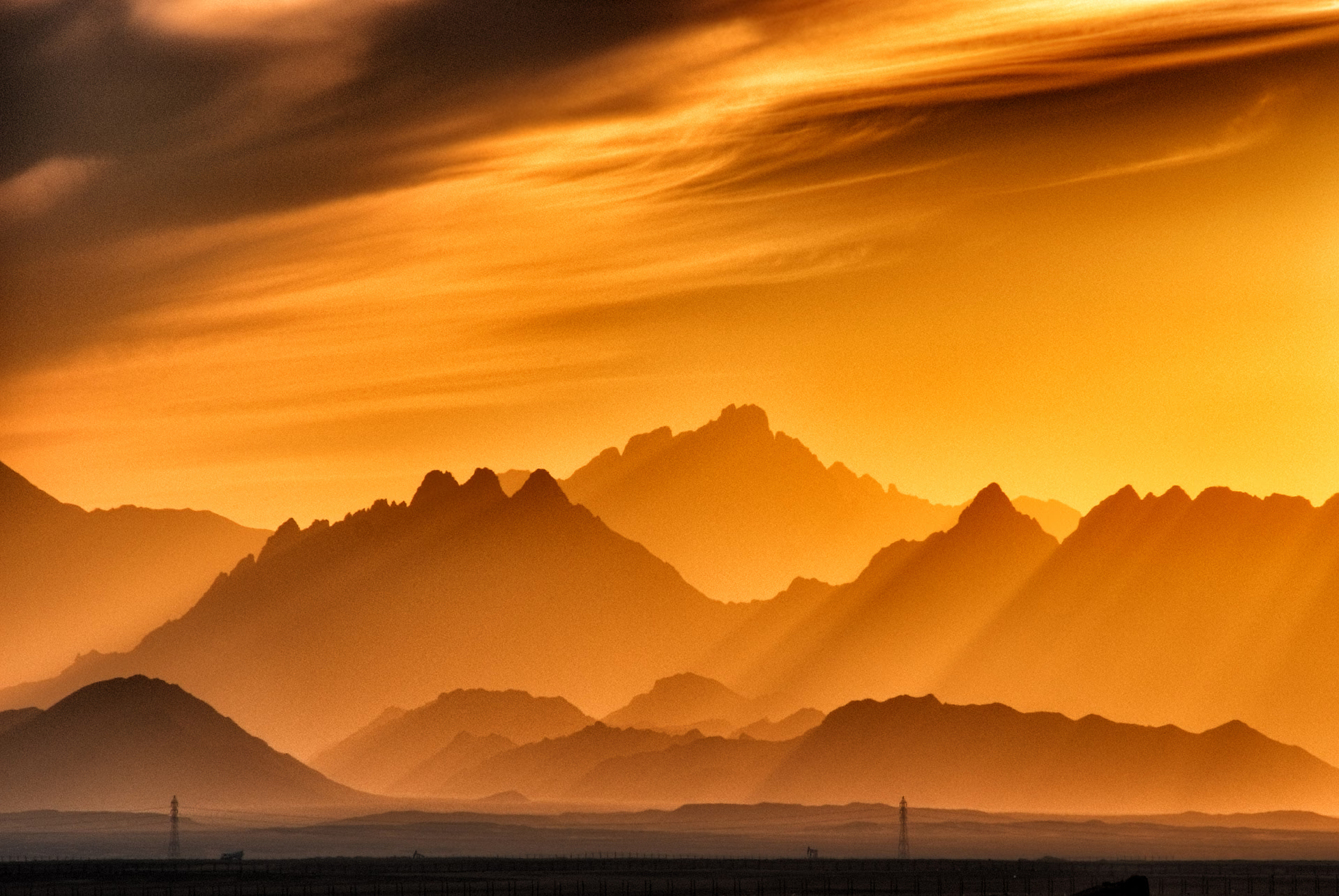
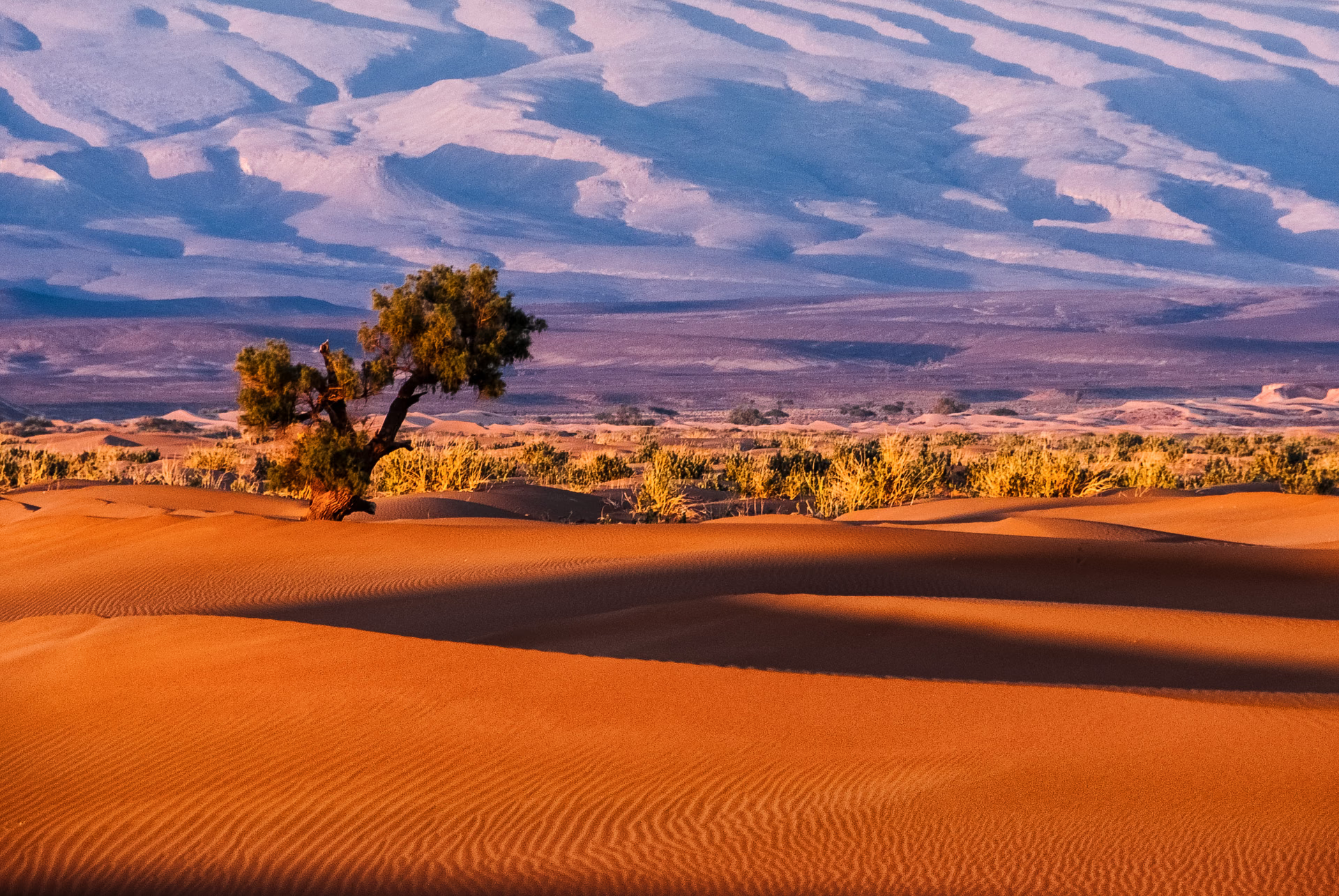
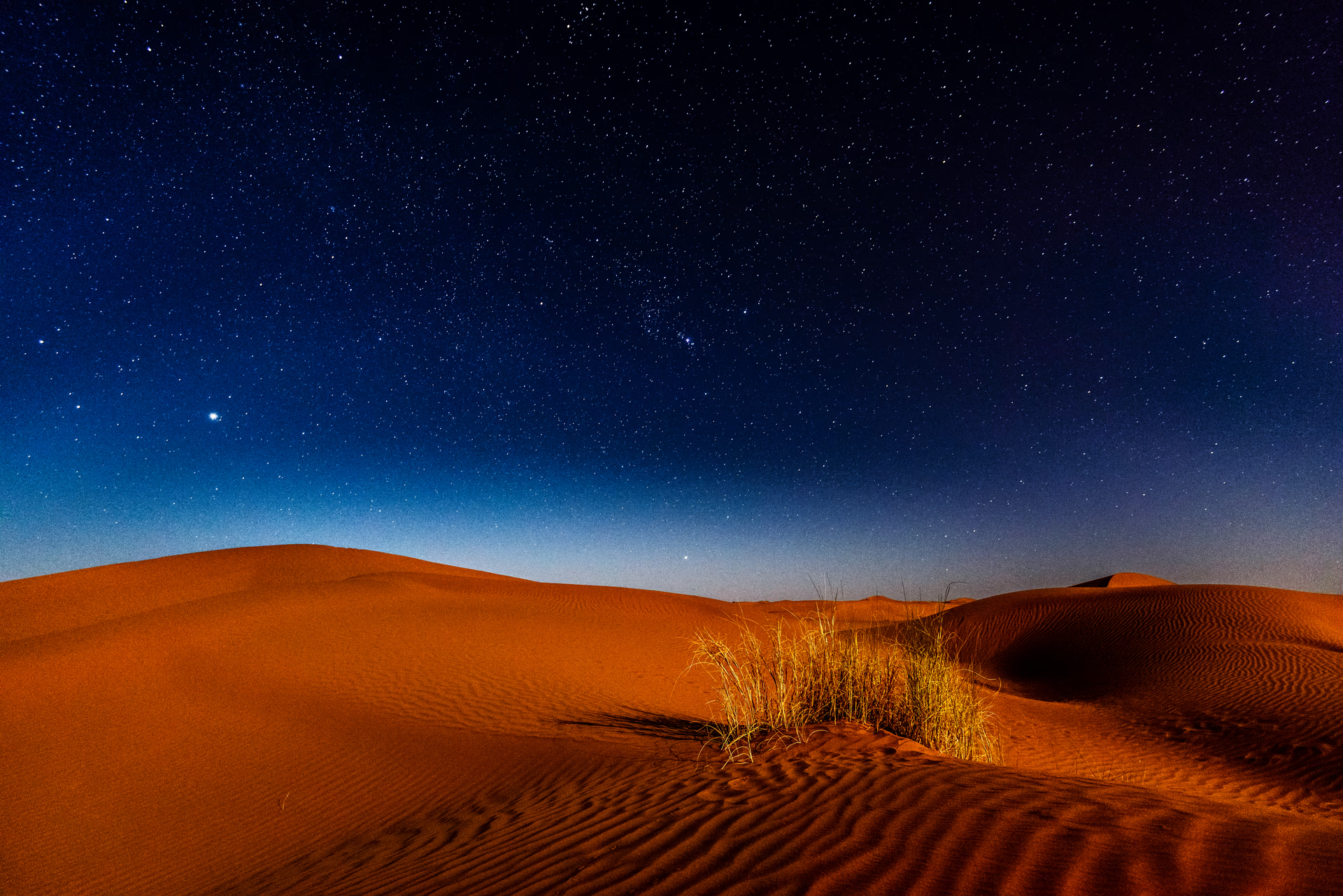
This project is a road to that edge. It begins in the desert, where there is nothing but sand, wind and light, and people appear only as a chain of silhouettes along the crest of a dune. Then sand turns into clay: oases, kasbah walls, the first houses. Clay gives way to blue. In the narrow streets of a mountain town people go about their lives, cats doze on the steps, and the day unfolds at its own unhurried pace. And at the end, the road meets the Atlantic, where gulls — yet another kind of inhabitant — circle above the fortress walls.
I walked this land as a guest and never tried to pass for one of its own. What drew me was something else: how light — ochre in the desert, blue in the shade of city walls, golden over the ocean — tells more about a country than words can. Here the sun does not simply set. It shapes the colour, the rhythm of the day, and even the name of the land itself.
The series ends where the Maghrib ends: on the shore, in the last light of the day.
About the series
The series was shot in Morocco in 2013. Al-Maghrib is the Arabic name for Morocco; it literally means “the west”, the place where the sun sets. The 22 frames move toward sunset: from the Sahara desert, through the earthen kasbahs and the blue city of Chefchaouen with its inhabitants, to the Atlantic Ocean at Essaouira and an evening sky with gulls over the water.
The series brings together two of the author’s early projects, “Inhabitants of the Blue City” and “Land of the Setting Sun”, with which he was admitted to the Russian Union of Art Photographers in 2015.